This is a rather abstract and heavily conceptual idea that I thought of a while back. I kind of metaphysical idea that ties together many fields of science and history into a single cohesive picture.
Humans are gods for insects and other such lesser creatures. Many human religions have surprinting parallels with the life of insects such as moth and cockroaches experience living among humans in the environment created by humans. Human religions is possibly originated among the insects and then somehow transplanted into humans.
Why Some insects live side by side with humans
In our daily life we do not think much about insects such as moth, cockroaches, ants, spiders and such. To us these creatures are nothing more than pesky annoyances. When we see one, we either try to push it away or smash it. We use various pesticides to get rid of them and keep our homes insect free.
Despite our best efforts to rid ourselves of insects they always keep coming back, requiring us to keep using pesticides and such. That is because our dislike for insects is completely one sided. Insects keep coming back because for them we are very beneficial, benign even beings. It would not even be a stretch to call humans gods of insects, because from a perspective of an insect, the power and abilities we have are as omnipotent as these of Christian or Muslim god.
Various nature supporters like to say that humans destroy natural habitats of various animals and such. That worldview stems from rather naive view on wildlife. In reality out there in the wilderness food is scarce and predators that wish to prey on smaller creatures are many. Thus, most animals want two things: protection from predators and abundance of food. Human society provides from with ample of both.
To begin with, humans have ample of food. We store out food for future consumption, and such food can easily be eaten by various insects. Sure, food we use for our own consumption is stored in a matter that protects it from pests, but even without access to protected food, pests still have plenty to feed on. That is because we use food wastefully, we eat the good parts, throwing away less desirable pieces. Since we are so large we do not care for small things like breadcrumbs and such, every so often we will accidently drop a cookie on a floor and just ignore it. To us such small amounts of food are too insignificant to care about, but insects are much smaller than us. What is insignificant amount for someone our size is something that can feed a colony of cockroaches for a week or even a month. Top this with the fact that we sometimes discard food as spoiled and inedible and you have a complete bonanza. From a cockroach perspective it must look like we are benign gods who provide them with so much food that cornucopia metaphor will be appropriate to describe it.
Second is protection. Human build structures give small pests plenty of nooks and crannies to hide, from birds, lizards and other such animals that feed on insects. Since insects are much smaller than birds it is much easier for them to hide while those who feed on them sure to attract more human attention. From size perspective birds and small animals clearly have reasons to fear humans, as humans might want to kill and later eat them. Insect is too small for human to pay too much attention so it's easier for it to hide meanwhile a bird is sure to attract attention and will not be able to hide. Because of that human made structures make for effective protection for insects and even mice.
Because of the above reasons it's not too strange that a lot of insects such as moth and cockroaches live in the cracks and shadows of human settlements and prosper on the scraps that we cast aside as trash.
Why Insects See Humans as Gods
First of all, insects can be certain that we exist. They see us every day and far more often than we see them.
Second from an insect perspective we are omnipotent. We have ample of food, by wild nature standards, so much that it just lay around with no one taking it. We can build huge structures, turn clay into bricks, concrete and more. We can chop trees and make them into furniture, or toys and more. For a tiny insect such power is sure a sign a divine level of omnipotence. We also can just smash an insect with a slap of a hand, a power so huge by insect standard, its incomprehensible.
Humans created the world. We can see that a lot of the world is not created by us, but from a perspective of a tiny insect, a simple human house or even a room is like the entire world. Some of them can live their entire lives in human made structures without ever stepping foot outside.
Humans (gods) are eternal, they always been there. That might sound a stretch but relative to an insect lifespan human one is indeed near eternal. Most insects only live a single day or so. In that short time span, they hatch, grow, mature and mate, lay eggs and die. Withing a single human year and hundreds of insect generations will be born and die. Seasons will change, bountiful summer will end, and life will completely cease for insects. Unlike warm bloodied animals, insects and even reptiles cannot survive winter and subzero temperatures. Insects experience winter like the end of the world. Yet when winter ends and world is reborn somehow only humans remain alive and not even that much changed from last season. From insects' perspective this ability must mean that we are greater that world itself, that we create and destroy world at will. Death of the world does not affect us in the slightest. We are there when world dies and we again there when world begins anew.
Furthermore, in spring when new world beings, we plot earth, plant crops, build things and do other things. Insects must surely see it as we creating the world right in front of their eyes.
Humans (god) work in mysterious ways. No matter how much a moth of a cockroach will scratch their insect brain, they will never be able to understand why we live our lives the way we do. Why we create all these structures and then just leave them empty. Why we plant crops and leave them alone. They cannot understand concepts such as work, daily commute and so on. They also cannot understand why we dump so much food into dumpsters where they can easily access and eat it. The very idea of discarding something edible is incomprehensible to them.
Because of that they will likely explain in the matter as if we deliberately create food and leave it in the dumpster for cockroaches to eat it, multiply and fill the dumpster with themselves. A cockroach will not be able to explain it in any other way. It's like a genesis myth were God created heaven and earth, filled it with various plants and animals for humans to live in, enjoy it, eat is, procreate and fill the earth. Except it's us humans who do it for cockroaches and we do not do it to feed them, but end result matches.
Because of the above cockroaches and other pests must view us as benign loving gods who build them homes (dumpsters) and fill them with food and other items. They think that we love and care for them from the bottom of our hearts. Of course we are not doing it for them at all, but they have no way of knowing that.
Of course, we also kill cockroaches and other pests. Since we do not eat them, like a bird would. Cockroach will not be able to understand why we do so. After all their live is controlled by just two desires to eat and to breed, they can understand a bird snapping insects and eating them. They will see a bird as a giant man-eating (insect-eating) dragon of sorts. However, why would humans kill an insect and just leave its dead carcass out there. They would think it's some kind of divine plan than a common cockroach cannot even comprehend (see humans work in mysterious ways).
Alternatively, and much more likely, they will see it as some sort of divine punishment for transgressing on some divine law. Every religion is filled with complex rules and strong prohibitions against transgressing on gods' territory or offending god in any way. For humans such rules are pointless, but for an insect trying to survive in human world, such rules will clearly help. Cockroaches that do not crawl where people can see them will much more likely to live longer than those who do. There is also prohibition from seeing God for the same reasons.
Also, sometimes we will wash dumpsters and other things. From an insect perspective it must look like biblical flood that destroyed most humans on earth.
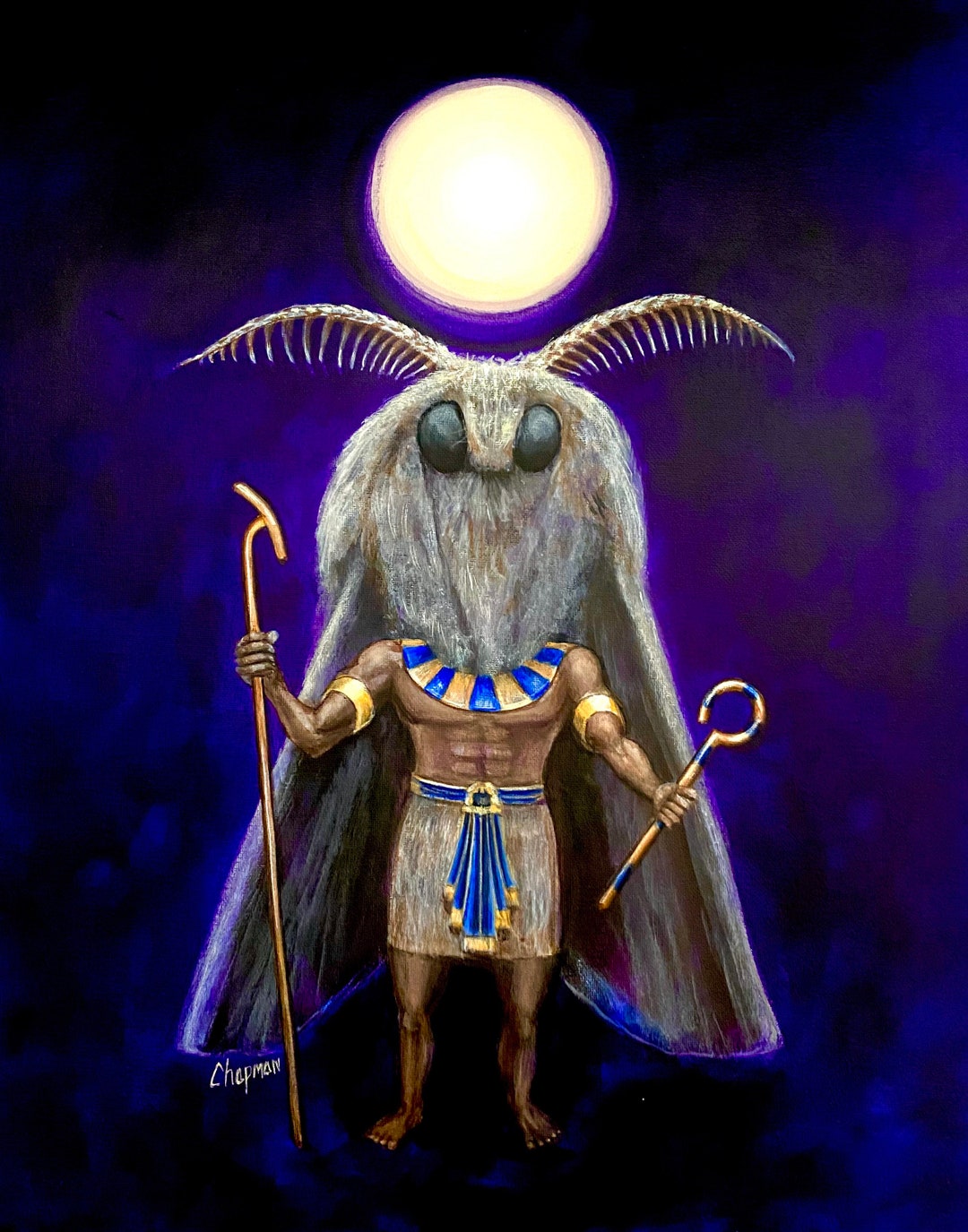
There are also these lines in the Bible. This is my body eat is, this is my blood, drink it. Moth feeds by consuming human clothes. Moth cannot understand concept of clothes, so they likely see it as body f god, that God have given them to eat. Other insects such as mosquitos, drink human blood, I am not sure if they see it as wine, but close to how it was Described in bible.
There are other similarities, for example monks' robes are of the same colour as cockroaches are.
All of the above gives rather clear indication that religion and god or gods are no one else but us seen by insects that live in human inhabitant areas. Parallels are far too many to simply ignore is as mere co-incidences.
Implications for Humans
If you think about this idea for some time, you might be able to come up with many different conclusions, implications and such. This topic is certainly worth analysing and thinking about more and more.
However, I have a few conclusions on my own.
To begin with, if insects live this way in hooks, crannies and other refuses of human civilization, could it be that we themselves live in some sort of dumpster bin of some very huge and powerful civilization?
That might sound as a stretch, but I can make you a parallel for that as well. Our planet Earth is rotating around Sun, while Sun and our entire Solar System, is rotating around a Black Hole. We cannot comprehend what a Black Hole is, as even light is absorbed by it, making it's physically impossible to see what it is inside.
Using a commonsense Occam Razor logic, I can suggest that we are in a sink or a metal toilet of a very large civilization. The Black Hole is a drain, and we are slowly being pulled into it. Our galaxy is the water that is slowly going down the drain. Meanwhile other galaxies our telescopes can see are merely curved and twisted reflection of our own galaxy in the chromed faucets and walls of said sink. The fact that we see so many galaxies is because of the same effect that two mirrors placed against one another produce an infinite duplication of images.
In our time it will be trillions of years before our Solar system will be consumed by a Black Hole, but for civilization that created that sink it will be mere seconds. Just like insect lifespan is insignificantly small compared to ours, our own is insignificantly small compared to theirs.
The giant civilization is completely oblivious of our existence, they merely using their sink to remove some waste. They do not think if that will kill anyone and even if they knew it would, they would not care or stop. To them our existence much smaller than that of insects, they could not care less.
Not only that, but the way they perceive time is different from us. What is trillion years for us are but mere seconds for them. Because of this difference we will not be able to communicate at all.
Even if they created us in some way, it was most likely done by accident, not intentionally. Furthermore, they are not even aware they created us or that we exist at all. How they simply getting rid of not even us, but of the substance that gave birth to us.
That further means if such giant civilization indeed exists, it's pointless to worship them or anything. It's also pointless to think that such civilization care for us or will help. It might be interesting to contact them or study them just out of curiosity, but I would not expect much.
It works the same way below. Each human and other living being consists of trillions of cells. Each of these cells are self-contained ecosystems and communities of sorts. They live by their own rules, have their own subdivision of roles and so on.
Despite consisting of them, we pay no heed to the cells. For us these minuscule units that together make up our existence is nothing to be concerned about. Most do not even aware they exist, much less understand how they work or why?
It is hard for us to judge if our own cells are aware of our existence or aware that they are part of something bigger than themselves. Answer to such question is completely irrelevant to the functioning of the cell. They live in their own world and concern themselves with their own problems, paying no need to us.
It might as well be that we, our solar system, galaxy and universe is but a cell in the body of some ginormous being. Even if that is indeed, so, it does not mean that our lives here are in any way dependent on that being. They are too large to matter to us; we are too small to matter to them. Fundamentally their lives do not affect us in any way, just as our live here hardly affect them.
That once again means that there is no reason to call such a being, we are part of God. Fundamentally they do not affect our live in any meaningful way to concern ourselves with them beyond simple scientific curiosity.
Furthermore, in order to better understand and classify the world I propose a tier system of layers of existence. We would be the zero layer. Things that bigger than us, like solar systems would be one layer higher and things smaller than us, a layer lower. Solar systems will be layer 1, galaxy layer 2, universe layer 3 and something that universe is part of is layer 4. In contrast cells will be layer -1, molecules layer -2, atoms -3 and quarks that make parts of atoms layer -4.
In conclusion I would like to say that ideas outlined in this text can help humanity better understand the world around us. We have individual scientific disciplines that do a great job studying individual parts of the world we are living in. However, we hardly have anything to tie all this knowledge together into a single cohesive picture of the world. I think such discipline can be called metaphysics and I think the article above can be considered a contribution to metaphysics.
This article will not be the first one. I wrote many other articles that can be considered metaphysical in their character. I indent to continue my metaphysical research.